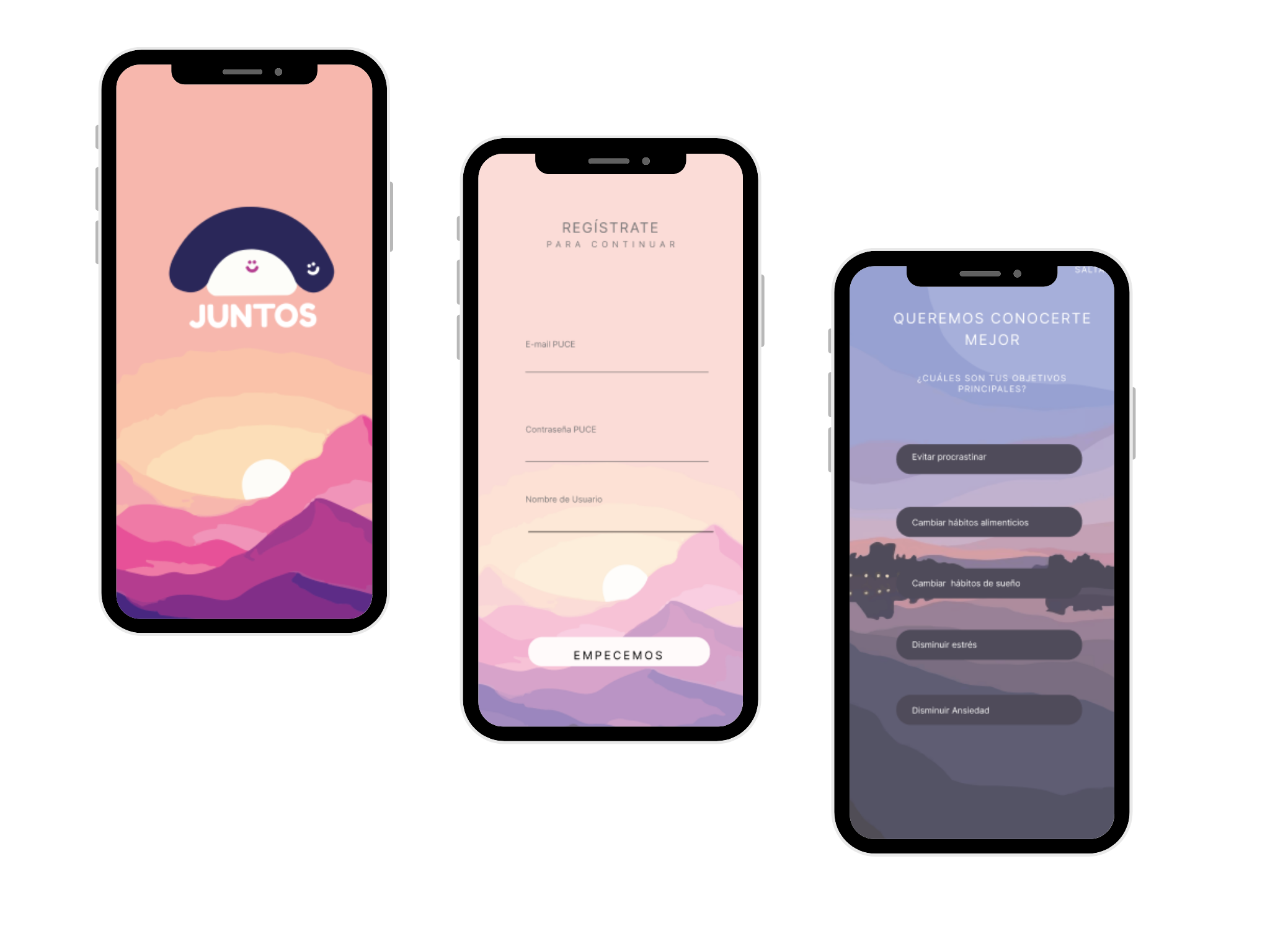
JUNTOS

Student Mental Health App

Timeline: 

12 weeks

Role:

UX Researcher& Designer

Team:

Nicole Chacón, Nicole Proaño, Pamela Sosa

Type:

Academic project for Pontificia Universidad Católica del Ecuador

Tools:

Figma, Miro, Google Forms, In-depth Interviews, Zoom, Adobe Illustrator

The Challenge

COVID-19 drastically increased anxiety, depression, and emotional distress among university students. Although PUCE provided free psychological services, students were unaware of the program or faced confusion and bureaucracy when trying to access it. The system lacked communication, integration, and user-centric tools.


How might we design a supportive, accessible and emotionally intelligent system for students to seek mental health help with ease and confidence?

My Design Process

EMPATHIZE

Secondary Research

What we explored:

  • Increase in anxiety, depression, and burnout post-COVID

  • Psychological therapy trends: Mindfulness, ACT, CBT, journaling, and digital therapy

  • Innovation in psychological tools: mobile apps, VR therapy, physical stress-relief objects

Key Insights:

  • Students struggle with chronic stress, emotional instability, and academic pressure

  • Therapy trends favor accessibility, flexibility, and emotional self-regulation

  • Mobile solutions are becoming central in mental health care

User Interviews

We conducted three interviews with key stakeholders.

Paola Chacón

Role: Clinical psychologist

Area of Insight: Emotional needs and therapy practices

Key Questions

  1. What psychological issues became more frequent after the pandemic?

  2. What are the strengths and limitations of online therapy?

  3. How does the physical therapy environment impact students’ comfort?

Jaime Sánchez

Role: Administrator at PUCE Escucha

Area of Insight: Referral workflow and system structure

Key Questions

  1. What is the complete referral and intake process for students?

  2. What role do academic tutors play in emotional support?

  3. Do students know their rights to request mental health assistance?

Ivonne Ortiz

Role: Academic coordinator and student tutor 

Area of Insight: Student support process and limitations

Key Questions

  1. How do students from the design faculty access psychological support?

  2. Is there any follow-up process after a student attends a session?

  3. What are the current limitations tutors face when referring students?

Interview Findings

  • Students are not followed up after sessions — there is no continuity.
  • The system is fragmented: tutors, the wellbeing department, and psychological services do not coordinate efficiently.
  • Students show emotional reluctance and lack awareness about the service.
  • Academic tutors act as first contact points, but they are not trained mental health professionals.
  • A centralized digital tool could reduce friction and create a smoother, more supportive experience.

Student Survey Summary

To better understand students’ emotional needs, awareness of services, and openness to digital tools, we conducted a survey with 146 students from the Faculty of Architecture, Design, and Arts (FADA).

This chart shows that most students had low awareness of existing psychological services.

This visual highlights student emotional needs and strong interest in mobile wellness tools.

Survey  Findings

  • 67% of students were not aware the service existed
  • 21% of users found the current system slow or confusing
  • 78% showed interest in using a mobile app for support
  • 53% reported high levels of stress and academic anxiety
  • Most preferred asynchronous tools like journaling and breathing exercises

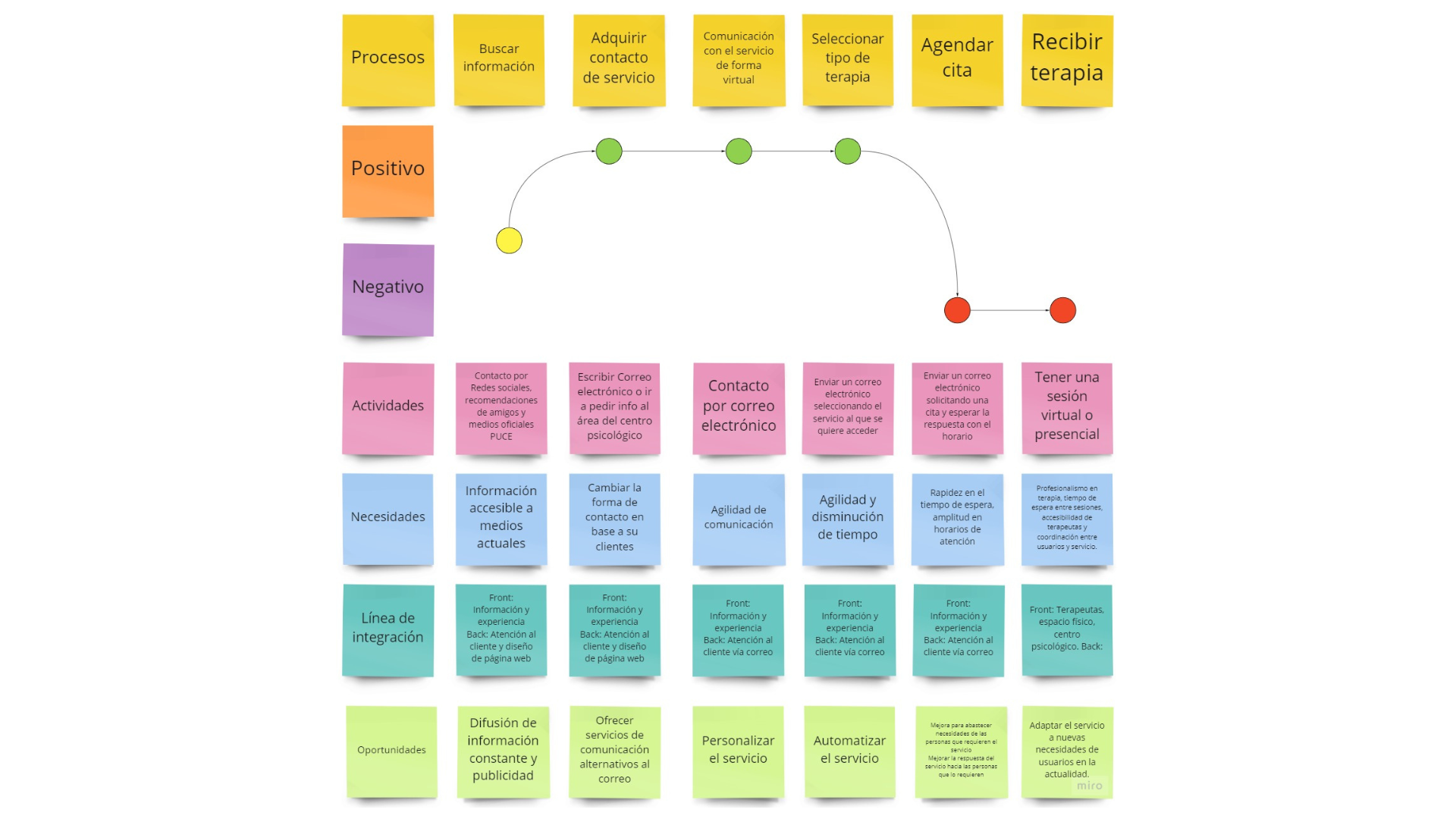
Customer Journey

To understand the emotional, cognitive, and practical experience of a PUCE student when trying to access psychological services

This journey map visualizes the student experience when trying to access mental health services at PUCE, revealing key emotional and functional pain points. (MIRO)

Customer Journey Findings

  • Students feel emotionally unprepared to navigate the help-seeking process.

  • There is no centralized access point; steps vary by case.

  • Emotional friction increases due to inconsistent tutor involvement.

  • Students are left alone after the first session — no tools or continuity.

  • Lack of clarity discourages students from completing the journey.

Define

User Persona

A representation of our primary user, built from research insights, to guide empathetic and user-centered design decisions.

Project Goals

  • Develop a centralized, accessible, and student-friendly mental health platform.

  • Simplify the help-seeking process by reducing emotional and administrative friction.

  • Provide asynchronous tools that promote self-regulation and emotional continuity.

  • Create a supportive digital experience that feels human, confidential, and empowering.

  • Increase awareness and trust in PUCE’s psychological services through intuitive design.

IDEATE

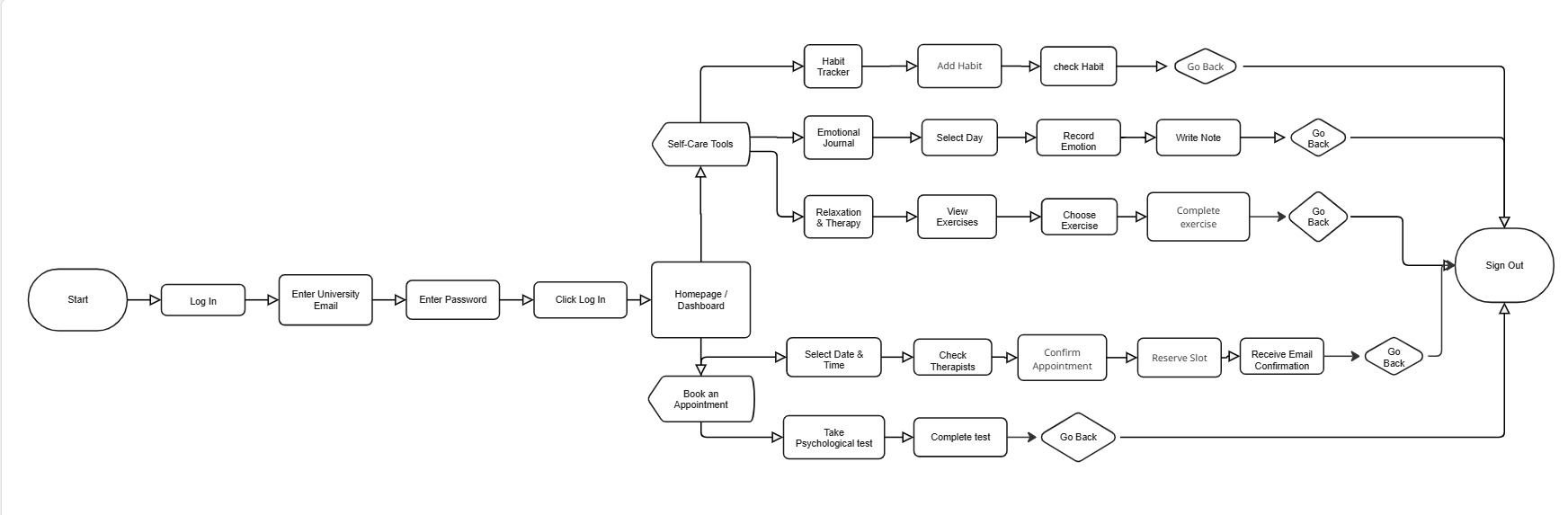
User Flow

A visual representation of how users interact with the app to complete key tasks. It helps identify the ideal path and potential friction points, guiding the structure of the user experience.

This initial user flow shows the main navigation path from registration to emotional support features. (MIRO)

Prototype

Low-Fidelity Prototype

A basic wireframe version of the app, focused on structure and functionality over visuals.

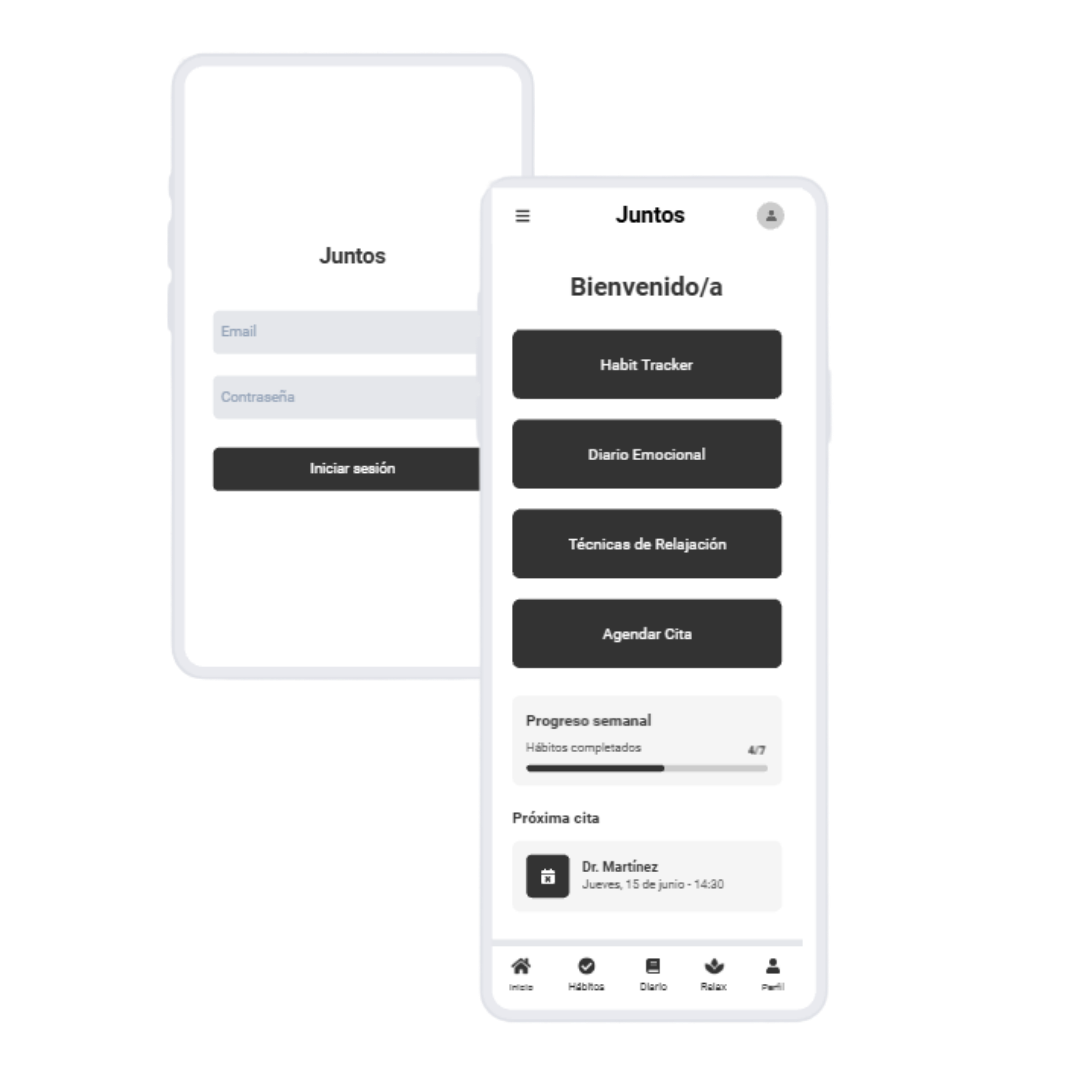
Login & Dashboard

Login screen and home dashboard showcasing simple navigation and quick access to wellness tools.

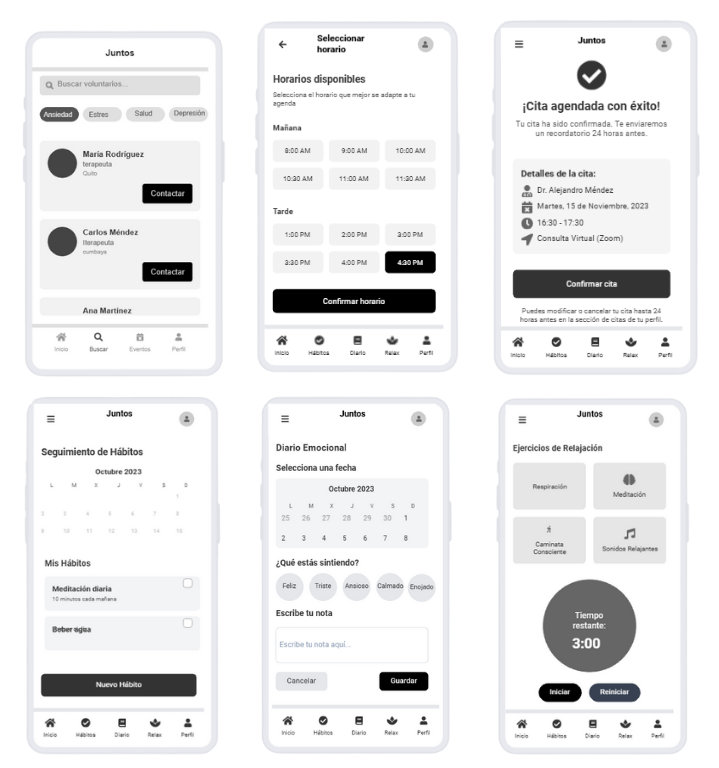
Appointment Booking Screens

Prototype of the appointment request flow before iteration based on user feedback.

Initial version of the booking system, later replaced by external coordination via email.

TEST

Key Results

conducted with 15 students

  • All users completed the tasks with ease.
  • Most found the appointment feature unnecessary due to administrative complexity, preferring the app as a wellness companion for emotional support and stress relief.
  • Students requested a warm, non-institutional design and suggested Apple Watch integration for mood tracking.
  • Students also suggested Apple Watch integration for on-the-go mood tracking.

High-Fidelity Prototype

Explore the interactive prototype

Click below to experience the full user flow directly in Figma 

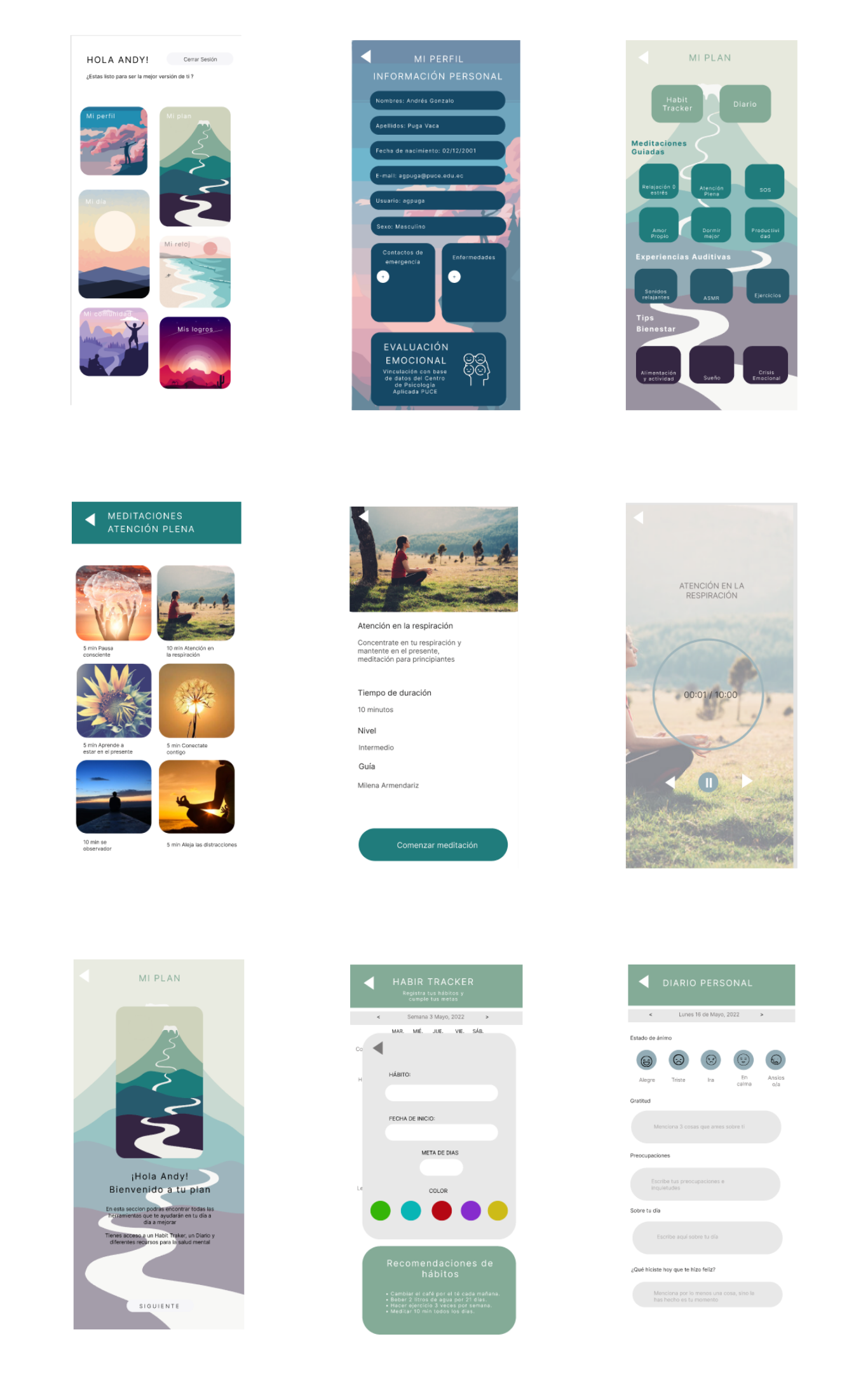
These are some of the final screens developed during the prototyping phase. (Figma)

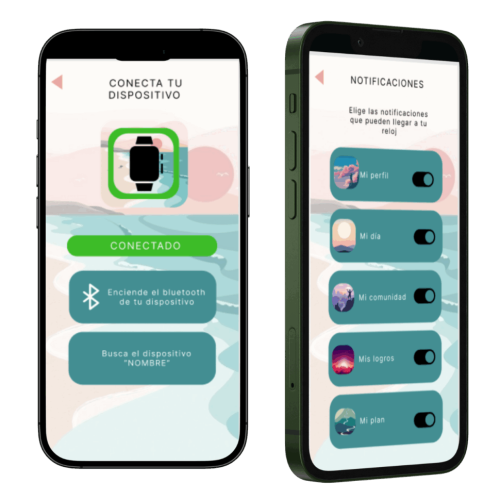
Apple Watch Sync

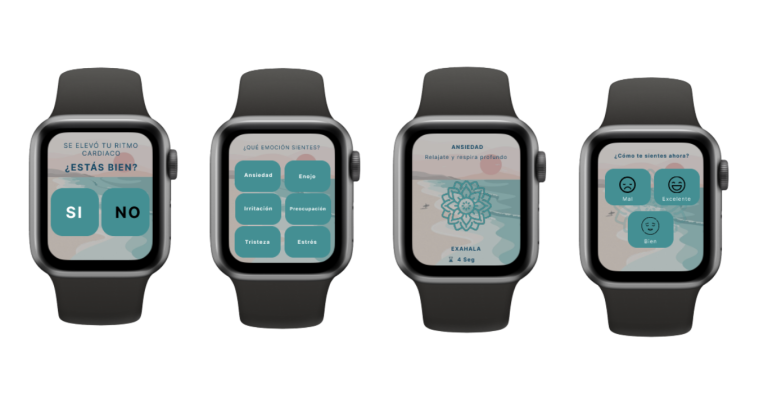
The app allows integration with Apple Watch to support users’ mental health on the go.

Taller- Servicio de psicología (12)

This preview shows how the main features adapt to the Apple Watch interface (Figma)

See the app in action!

A short video showing how users interact with daily check-ins, and Apple Watch syncing.

Get in Touch   nicolechy1808@gmail.com